

PPF or Ceramic Coating First? How to Layer Paint Protection in Al Ain
Key takeaways
- PPF is a physical barrier against stone chips, scratches, and abrasion.
- Ceramic coating is a thin layer that adds gloss, water beading, and easier washing, but little impact protection.
- When combined, PPF goes on the bare paint first, then ceramic coating on top.
- You can coat over PPF to make the film easier to clean and maintain.
- High-impact areas (front bumper, bonnet, mirrors) benefit most from PPF.
- Choice depends on panels at risk, budget, and how long you keep the car — not on marketing alone.
PPF and ceramic coating are not the same protection
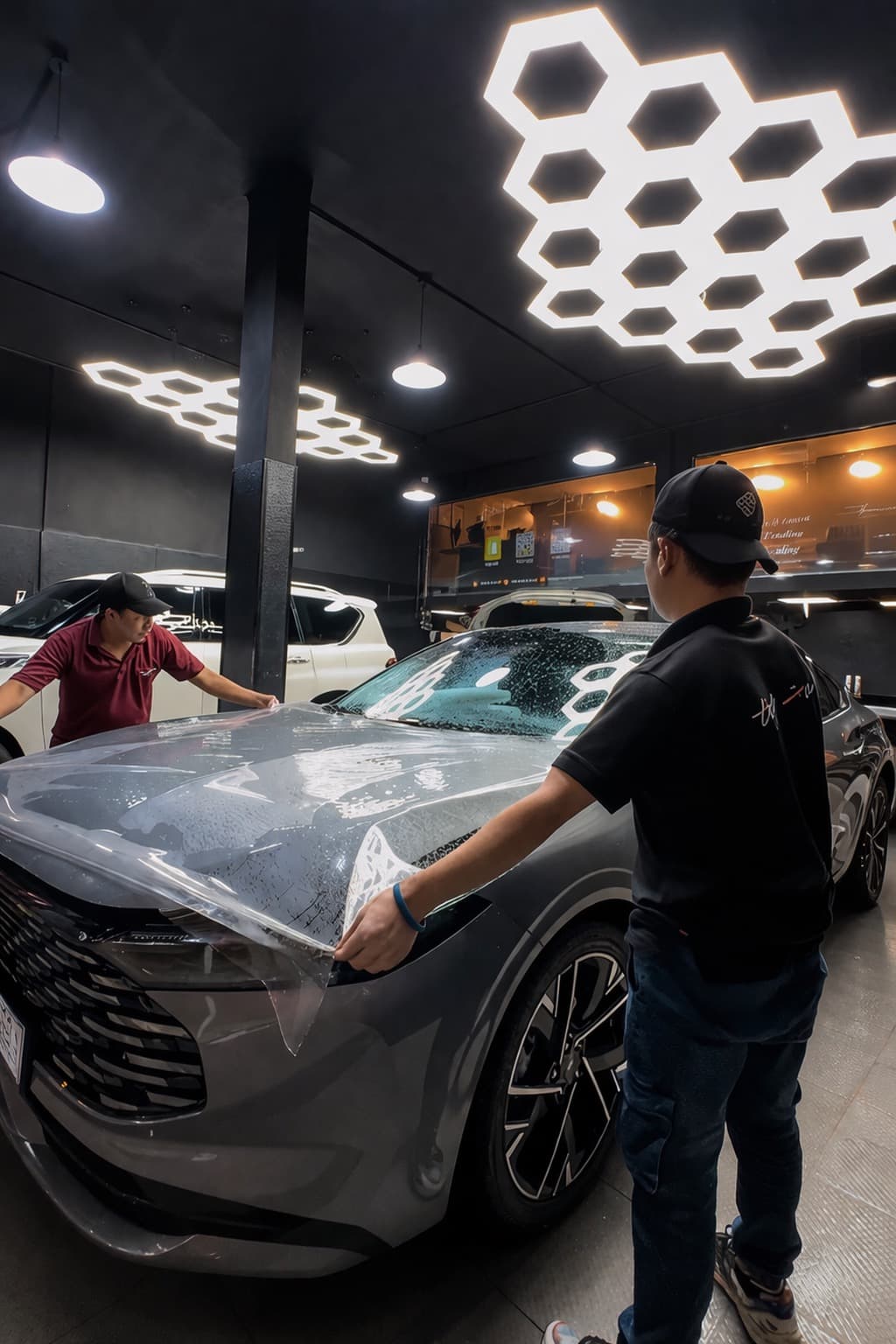
PPF is a thick, self-healing film that physically absorbs impact and abrasion. Ceramic coating is a thin, hard chemical layer that bonds to the surface for gloss and easier cleaning. One is a shield against damage; the other is a finish that makes the surface easier to maintain.
Because they solve different problems, comparing them as if one replaces the other is misleading. A ceramic coating will not stop a stone chip, and PPF is not primarily about adding depth of shine. Trust Auto Care describes each as a distinct service with its own preparation and process.[Trust Auto Care — PPF service process in Al Ain]
Film manufacturers such as XPEL position PPF as impact and abrasion protection, and offer ceramic products intended to sit on top for easier cleaning. That combination — film for protection, coating for finish — is the basis of layering.[XPEL — Paint protection film FAQs]
Which does what
| Need | Best suited | Why |
|---|---|---|
| Stone chips and abrasion on the front end | PPF | A thick film absorbs impact that a thin coating cannot. |
| Deeper gloss and water beading | Ceramic coating | The coating adds a hard, hydrophobic finish. |
| Easier washing and dust release | Ceramic coating (including over PPF) | A slick surface holds less contamination. |
| Maximum protection and finish | PPF first, ceramic on top | The film protects; the coating makes the film easier to keep clean. |
Deciding what to book
- 1List the panels most exposed to stones and abrasion.
- 2Decide whether impact protection or finish matters more to you.
- 3Consider how long you plan to keep the car.
- 4Ask whether partial PPF plus a full ceramic coating fits your budget.
- 5Confirm the order of work if you choose both.
- 6Get the film and coating products named in writing.
Why PPF goes on first
When both are used, PPF is installed on the prepared paint first, and the ceramic coating is applied on top of the film. The coating then protects and slicks the film's surface, making it easier to wash and helping it shed dust.
Applying a coating over PPF is a recognised approach: it does not replace the film's impact protection but makes the film easier to clean and maintain. Gtechniq and other coating makers publish maintenance guidance for coated surfaces, which applies to a coated film surface as well.[Gtechniq — coating application and maintenance guidance][XPEL — Paint protection film FAQs]
The reverse order does not make sense: coating the bare paint and then trying to bond film over the coating undermines the film's adhesion. If you plan to have both, tell the installer up front so the paint is prepared, the film is fitted, and the coating is applied in the correct sequence.[Trust Auto Care — PPF service process in Al Ain]
Choosing for Al Ain conditions and budget
For many Al Ain drivers, a practical combination is PPF on high-impact front panels and a ceramic coating over the rest of the car, so the most exposed areas get physical protection while the whole car becomes easier to clean in a dusty climate. The right mix depends on the vehicle and budget.[Trust Auto Care — vehicle-specific protection packages]
Trust Auto Care prices protection work by vehicle and selected service rather than a fixed universal amount. Send the make, model, model year, paint condition, and the panels you most want protected for a relevant quote.[Trust Auto Care — vehicle-specific protection packages]
PPF and ceramic layering questions
Should I get PPF or ceramic coating?
It depends on the problem. Choose PPF for impact and abrasion protection on exposed panels, and ceramic coating for gloss and easier cleaning. Many owners combine both.
If I get both, which goes on first?
PPF is applied to the prepared paint first, and the ceramic coating goes on top of the film. Tell the installer in advance so the sequence and preparation are correct.
Can you put ceramic coating over PPF?
Yes. Coating over PPF is a recognised approach that makes the film easier to wash and helps it shed dust, without replacing the film's impact protection.
Does ceramic coating protect against stone chips?
No. Ceramic coating is a thin layer for finish and easier cleaning. Physical impact protection comes from PPF.
Do I need full-car PPF?
Not always. Many drivers protect high-impact front panels with PPF and coat the rest of the car, which balances protection, finish, and budget.
Sources and verification notes
Manufacturer references describe their own products and do not establish that Trust Auto Care supplies, installs, or is authorised by those brands. Product suitability and sequence should be confirmed for the film and coating actually used.
- Trust Auto Care — PPF service process in Al AinAccessed 2026-07-24
- XPEL — Paint protection film FAQsAccessed 2026-07-24
- Gtechniq — coating application and maintenance guidanceAccessed 2026-07-24
- Trust Auto Care — vehicle-specific protection packagesAccessed 2026-07-24
Plan your paint protection
Ask which protection your car needs
Send your car's make and model, model year, paint condition, and the panels you most want protected. Trust Auto Care can advise on PPF, ceramic coating, or a combination and prepare a vehicle-specific quote.
Ask about protection on WhatsApp